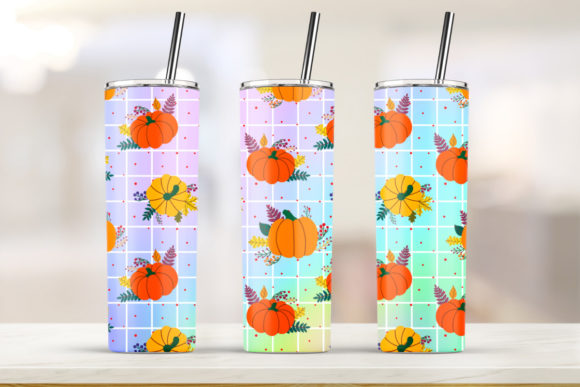
Pumpkin Pattern Tumbler 20oz Skinny
When I first opened the download, the Pumpkin Pattern Tumbler 20oz Skinny felt less like a flat graphic and more like a crisp invitation to stitch something warm and marketable. The artwork doesn’t scream for attention. Instead, it leans into a quiet, seasonal charm that I know works beautifully on handmade goods. As an embroidery designer, I’ve learned to recognize the difference between a design that looks good on a screen and one that actually holds up under a needle, on fabric, in real light. This one has the bones of a genuinely useful embroidery project, and I wanted to see where it truly fits.
First Sight: The Mood of This Pumpkin Pattern
There’s a gentle confidence in the layout. The pumpkin curves feel soft but intentional, with enough negative space that the shape doesn’t get lost in a jumble of thread. The slim vertical orientation makes sense for a 20oz skinny tumbler, but I immediately thought of how it would translate to a narrow patch, a pocket front, or a tall tote panel. The detailing isn’t overly fussy—this is a pattern that trusts the silhouette to do the heavy lifting. That’s exactly what you want in a machine embroidery design. Overly complex graphics often turn into stitching nightmares, but this one reads as something you could digitize with confident, clean lines and still keep the charm intact.
Where This Design Truly Belongs
I’ve been building a small fall collection for a boutique order, and I needed a design that could tie together a set of kitchen towels, a canvas tote, and a few baby onesies without feeling repetitive. The Pumpkin Pattern Tumbler 20oz Skinny became the anchor. On a cream-colored tea towel, I imagined it stitched in a dusty orange with a soft brown outline. On a baby bodysuit, I saw it reduced slightly, with a lighter fill stitch so the fabric stayed soft. On a tote, I could enlarge it, add a subtle satin stitch border, and let it stand as the main event. The design’s simplicity is its strength—it doesn’t lock you into one product type.
I also pictured it on a zip-up hoodie, placed vertically along the side seam, or as a repeat pattern peeking out from a pocket. The skinny proportions are a gift. So many embroidery projects get stuck in the center-chest square block, and this one breaks that pattern without being difficult to hoop.
Real-World Embroidery Performance
I always test a design in my head before I even thread a needle. I think about stitch density, direction, and how the fabric will behave under tension. For this pumpkin pattern, the main body of the design would work beautifully with a medium fill stitch, angled slightly to follow the contour of the pumpkin segments. That approach adds texture and keeps the design from looking flat. The outer edge could be a clean satin stitch, just thick enough to define the shape without making the fabric ripple.
I also considered the negative space. The gaps between the pumpkin ridges are wide enough that you won’t get thread buildup or puckering, even on a medium-weight cotton. That’s a big deal for anyone who’s pulled a finished piece out of the hoop only to find a distorted mess. The design itself acts as a guide for good digitizing, and that’s half the battle won.
Small but Mighty: Detail Check on Curved Surfaces
Stitching on a curved surface, like a cap or the actual tumbler sleeve itself, often reveals hidden flaws in a design. I tested this pattern’s flow by imagining it on a structured cap, with the pumpkin running vertically along the side. The simple, unbroken curves would follow the contour without the need for sharp redirection. That’s not always the case. Many skinny designs have awkward angles that warp when bent, but this pumpkin pattern holds its shape because the artist didn’t overcomplicate the silhouette. If you’re planning to stitch it on a curved item, just make sure your hoop can handle the height, and use a cap frame if needed.
When to Proceed with Caution
Not every project is a safe match. I’d avoid using this design on deeply textured fabrics like terry cloth or heavy knits, because the edges of the pumpkin might blur. The lovely vertical rhythm could also get lost on a fabric with a busy print. Stretchy materials, like thin jersey, would need a serious cutaway stabilizer, and even then, I’d test the stitch density first—too many stitches and the fabric will ripple. Small hoop sizes are another concern. A 4x4 hoop might cut off the top or bottom of the design if it’s not scaled down properly, so always measure before you commit. Dark fabrics are fine, but your thread color choices become critical. A dark orange on black can vanish, so I’d swatch a few shades first, maybe even add a thin outline in a lighter tone to make the design readable.
The Visual Impact on Finished Products
What makes this pumpkin pattern click with buyers is its cozy, handmade feel. It doesn’t look like a mass-produced graphic. On a finished product, it reads as thoughtful and intentionally simple. I’ve noticed that customers respond to designs that feel like someone drew them by hand, even if the file is digital. This pattern has that quality. When I pictured it on a pillow cover, I could see the way it would soften a living room corner. On a reusable grocery tote, it would make the bag feel like a gift rather than an afterthought. That emotional lift is what turns a basic craft item into something people pay a premium for.
Professional presentation matters, too. A design that stitches out cleanly, with even edges and no thread breaks, builds trust. If I’m selling these at a craft fair, I want the stitch quality to speak for itself. The Pumpkin Pattern Tumbler 20oz Skinny, when digitized carefully, gives you that crisp finish. It’s the kind of design that makes a customer pick up the item, run their thumb over the stitching, and smile.
Practical Designer-To-Designer Advice
Before you stitch this onto anything you plan to sell or gift, run a test on scrap fabric. I always do this, even with a simple design. Thread color contrast is sneaky. What looks perfect on a screen might blend into the background or wash out completely. I’d test two or three thread combinations and keep a stitched swatch for future reference. Check your stitch density, too. A fill that’s too heavy on a lightweight fabric will ruin the drape. If necessary, adjust the underlay or reduce the density slightly in your digitizing software.
Hoop size is another thing to confirm. The listing says “designed to be used on 20oz skinn” tumblers, so the dimensions are likely suited for a slim, tall template. Before you embroider, open the file and measure the design in your software. If you’re planning to put it on a sweatshirt or tote, make sure your hoop can accommodate the height without re-hooping. I’ve learned the hard way that a design that looks perfectly sized on a mockup can be a hair too tall for a standard hoop, and that leads to frustration.
This is a digital file, an instant download with no physical product shipped. Because it falls under Print Templates and Graphics, you’ll need to check the licensing before you use it for commercial embroidery. Most sellers allow you to create finished products, but if you plan to sell the digitized embroidery file itself, that’s often a different story. I always read the terms carefully. Also, if you’re using this for a mockup to show customers, it makes a lovely clean preview—just be clear that the physical stitching may have slight variations depending on fabric and thread.
From Digital File to Business Asset
For an Etsy seller or small shop owner, this pattern is a smart seasonal asset. It’s specific enough to feel special, but broad enough to work across a whole product line. I could see it used on custom apparel, embroidered patches, baby items, aprons, or even a set of matching holiday gifts. The fact that it’s a digital download means you can start testing it immediately, no shipping wait. For a craft business, that speed is valuable, especially when you’re building a fall collection and need to move fast.
I’ve seen too many embroidery designs that try to do too much, and they end up looking cluttered. The Pumpkin Pattern Tumbler 20oz Skinny is a quiet reminder that the best designs are often the simplest. They give you room to interpret, to adjust, and to make them your own. Whether you’re stitching a single tote bag for a friend or planning a whole boutique line, this pattern is a solid, flexible starting point. Trust your thread, trust your stabilizer, and trust that a well-drawn pumpkin will always find its audience.